
Setting up a home gym the right way is not about cramming as much equipment as possible into one room and hoping it all works out. The smartest home gyms are built in stages, with each piece earning its place, supporting the next upgrade, and giving you room to train harder as your goals change. That matters whether you are starting with a spare bedroom, a garage corner, or a full dedicated space, because the wrong setup creates frustration fast. You end up with wasted money, awkward layout problems, equipment you outgrow too quickly, or a room that feels cluttered instead of motivating.
A home gym that grows with you should feel useful on day one and still make sense a year from now. That means your first purchases should solve immediate training needs while also fitting into a bigger long-term plan. Instead of chasing random equipment or buying flashy items that do not improve your actual workouts, focus on building a system. The right system gives you strength training, progression, flexibility, and enough space efficiency to keep adding pieces without starting over. When you approach your setup this way, every upgrade feels intentional and every dollar goes further.
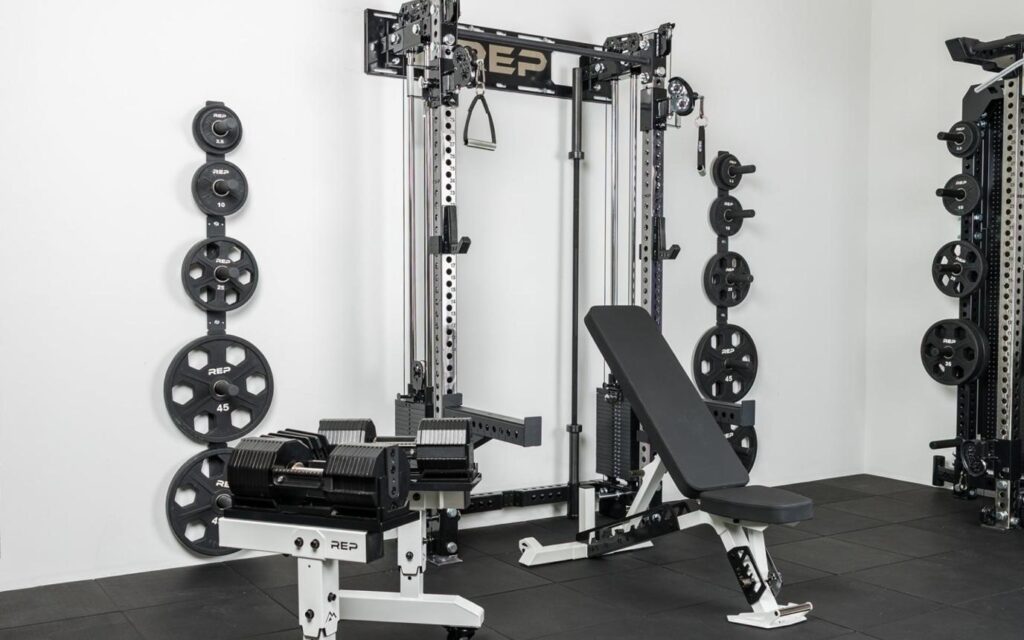
How to Set Up a Home Gym That Grows With You
Before you buy anything, decide what your gym actually needs to do for you. A beginner who wants fat loss, muscle gain, and basic strength does not need the same setup as someone training for serious barbell progression or high-volume hypertrophy. Your equipment choices should come from your training style, your schedule, your available space, and how committed you are to sticking with the routine. If your setup does not match the way you will realistically train, even good equipment becomes a bad purchase.
Think in terms of phases. Your first phase should cover the essential movements: pressing, pulling, squatting, hinging, core work, and conditioning. Your second phase should improve load progression, convenience, and exercise variety. Your third phase should increase specialization, which could mean heavier strength work, better cable training, more storage, or higher-end support equipment. This approach keeps your gym functional from the start while leaving room to upgrade with purpose.
Choose the Right Space and Build Around It
The best home gym layout is the one you can actually use consistently. That means you need enough ceiling clearance for overhead work, enough floor space to move safely, and enough wall or corner planning so your equipment does not fight against the room. A spare room setup usually rewards compact benches, adjustable dumbbells, resistance tools, and wall-conscious storage. A garage gym gives you more flexibility for racks, barbells, benches, and machines, but it still needs a clean footprint if you want it to stay organized and easy to train in.
Flooring matters earlier than most people realize. Even a simple setup benefits from a stable surface that protects both the room and the equipment. Good flooring improves traction, cuts down vibration, and helps define your training zone so the space feels intentional instead of temporary. Once the room feels like a real gym, consistency usually improves because the setup no longer feels like an afterthought.
Build in Layers Instead of Buying Everything at Once
Most people overspend at the start because they think more equipment equals better training. It usually does not. A better strategy is to build in layers. Your first layer should give you the most exercise value for the least wasted space. Your second layer should make your workouts smoother and more progressive. Your third layer should support long-term expansion based on the kind of training you enjoy most. To expand your setup further, review our Best Home Gym Cable Attachments guide for more versatility.
For many people, that first layer includes an adjustable bench, adjustable dumbbells, resistance bands, a suspension trainer, and quality flooring. That combination covers a surprising amount of training without locking you into a huge footprint or a huge budget. From there, your second layer could include a rack, barbell, plates, and better storage. Your third layer might add cable work, specialty attachments, cardio equipment, mirrors, or upgraded organization. The key is that each new purchase should improve the gym you already have instead of replacing a mistake you made too early.
Prioritize Versatility Over Volume
When space and budget matter, versatility wins. One well-chosen piece that supports dozens of exercises is more valuable than three pieces that do almost the same thing. That is why adjustable equipment, modular systems, and compact accessories make so much sense in a growing home gym. They give you more ways to train without making the room feel crowded or forcing expensive upgrades too soon.
This is especially important for beginners. You do not need a fully loaded commercial-style setup to make serious progress. You need equipment that lets you train consistently, progress safely, and expand logically. The gym should grow because your needs have grown, not because your original setup was poorly planned. That difference saves money and keeps the space effective from the beginning.
Best Equipment to Start a Home Gym That Can Grow With You
Bowflex SelectTech 552 Adjustable Dumbbells
Bowflex SelectTech 552 Adjustable Dumbbells are one of the strongest starting points for a growing home gym because they compress an entire dumbbell rack into a much smaller footprint. For beginners, that means immediate access to a wide range of weights for presses, rows, curls, lunges, shoulder work, and general conditioning without filling the room with clutter. For more advanced users, they remain valuable even after the gym expands because they are fast to use, easy to adjust, and perfect for accessory work when a full rack setup would be overkill.
What makes these dumbbells such a smart buy is how well they fit the growth model. Early on, they may be your primary strength tool. Later, they become your secondary training tool for volume work, unilateral movements, warmups, and higher-rep exercises. That gives them a longer useful life than many beginner purchases. Instead of becoming obsolete once you upgrade, they stay relevant as part of a layered setup, which is exactly what you want in a gym designed to evolve.
Flybird Adjustable Weight Bench
A quality adjustable bench is one of the most important foundation pieces in any home gym, and the Flybird Adjustable Weight Bench works well because it supports a huge range of exercises without demanding much space. It gives beginners the ability to train flat and incline pressing, seated shoulder work, dumbbell rows, step-ups, split squats, and core movements with much better form and exercise variety than a flat bench or floor-only setup. That flexibility helps you get more out of every other piece of equipment you buy.
As your setup grows, the bench becomes even more valuable because it works with nearly every stage of your gym build. It pairs with adjustable dumbbells in the beginning, fits naturally into a later rack-and-barbell phase, and continues to matter for accessory work even when you add more advanced equipment. The right bench is never just a bench. It is a central platform for progression, and buying a solid adjustable option early prevents you from needing to replace a weak or unstable one later.
Fit Simplify Resistance Loop Bands Set
Resistance bands are often treated like beginner-only gear, but that is a mistake. A good set like the Fit Simplify Resistance Loop Bands Set gives you warmup options, mobility work, glute activation, rehab-friendly resistance, travel training, and added variety that still matters once your gym becomes more advanced. For someone building phase by phase, bands are one of the smartest low-cost purchases because they fill gaps that heavier equipment cannot always cover efficiently.
Their long-term value is what makes them worth buying. In a beginner setup, they help create full workouts when heavier tools are still limited. In a more advanced setup, they support activation drills, burnout sets, tension-based variations, and movement prep before bigger lifts. That means they are not a temporary compromise. They are one of those rare pieces that stay useful at every level, which is exactly what a growth-oriented home gym should include.
TRX All-in-One Suspension Training System
The TRX All-in-One Suspension Training System is an excellent fit for people who want maximum exercise variety without sacrificing floor space. It allows you to train pushing, pulling, squatting, hinging, core stability, and mobility with one compact tool that can work in a spare room, garage, or even outdoors. For beginners, it is especially valuable because it lets you adjust difficulty by changing body angle, which makes progression easier and safer than many people expect.
What makes this a strong long-term buy is that it stays useful even after your gym gets stronger and heavier. A suspension trainer adds bodyweight variety, core control, stability challenges, and movement patterns that complement free weights instead of competing with them. It also helps fill the gap on days when you want a quick workout without setting up a full training session. In a growing gym, that kind of flexibility matters because convenience supports consistency.
BalanceFrom Puzzle Exercise Mat with EVA Foam Tiles
Flooring is one of the most overlooked purchases in a first-stage home gym, but it changes the entire feel of the room. The BalanceFrom Puzzle Exercise Mat gives your space a more finished training surface, helps protect the floor beneath your equipment, and creates a dedicated workout zone that feels intentional. That may sound simple, but it has a real effect on how often people use the space and how organized the gym stays over time.
As your gym expands, the importance of flooring only increases. More equipment means more pressure points, more movement, and more chances to damage the room or create an awkward training surface. Starting with a practical mat system helps you define your layout early, which makes future upgrades easier to plan. It is not the most exciting purchase, but it is one of the smartest because it supports every other piece you add later.
Yes4All Kettlebell
A Yes4All Kettlebell is a smart addition for people who want a compact piece that can handle strength, conditioning, power, and functional movement training without taking up much space. For beginners, it opens the door to goblet squats, swings, carries, presses, deadlifts, and core work with one tool. That makes it a strong option for building work capacity and movement quality while you are still growing the rest of your setup.
Its long-term value comes from how easy it is to keep using even in a more advanced gym. Kettlebells are excellent for finishers, conditioning circuits, warmups, explosive work, and full-body sessions when time is tight. They do not become irrelevant once you own more equipment. They simply take on a different role, which is exactly the kind of equipment choice you want when building a gym meant to evolve with your training.
How to Upgrade From Beginner to Intermediate the Right Way
Once you have a strong first layer, your next move should be improving progression. That usually means adding heavier loading options, better storage, and equipment that makes your training more efficient rather than more crowded. This is where many people add a foldable power rack, a barbell, plates, and a plate storage solution if the space allows. Those upgrades make sense because they expand your ability to train major lifts while keeping the original beginner tools useful for accessory work.
The biggest mistake at this stage is buying equipment that overlaps too much with what you already own. If your adjustable dumbbells and bench are doing their job, your next purchase should solve a new problem. Maybe you need heavier squatting and pressing options. Maybe you need cable-based exercise variety. Maybe you need storage because the space is becoming disorganized. Upgrade decisions should come from actual training limitations, not impulse buying.
How to Make an Advanced Home Gym Still Feel Efficient
An advanced home gym should not feel crowded, chaotic, or overbuilt. It should feel smooth. That means the layout supports your training flow, the equipment has a reason for being there, and the room still feels motivating instead of overwhelming. Advanced does not just mean more equipment. It means better equipment selection, better organization, and better understanding of what you personally use.
That is why even advanced setups still benefit from compact and versatile tools. Adjustable dumbbells, bands, benches, kettlebells, and suspension systems all continue to matter because they expand the way you train without forcing the room into a commercial gym footprint. The strongest home gyms are not built by chasing every possible machine. They are built by choosing equipment that works together and supports years of progression.
Common Mistakes That Ruin a Growing Home Gym
One of the biggest mistakes is buying for fantasy instead of habit. People imagine the version of themselves who trains with massive volume, multiple stations, and complicated splits, but their real routine only supports three or four focused sessions per week. When your purchases are based on fantasy, the room fills up fast and the setup becomes harder to use. Buy for the training life you actually live now, then expand as your consistency proves what deserves the next upgrade.
Another mistake is ignoring flow. A home gym should make it easy to move from one exercise to the next without constant rearranging. If your bench blocks your storage, your dumbbells sit in walkways, or your resistance tools are always buried, the setup becomes irritating instead of motivating. Smart home gyms feel clean, logical, and easy to use. That is what keeps them growing in the right direction.
FAQ
What should I buy first when setting up a home gym that can grow over time?
Start with equipment that gives you the most exercise variety without overwhelming your space or budget. For most people, that means an adjustable bench, adjustable dumbbells, resistance bands, and some form of flooring or surface protection. That setup covers a large amount of basic strength and conditioning work while leaving room to expand later. It also helps you avoid buying oversized equipment before you understand how you actually like to train.
Is it better to start with dumbbells or a rack and barbell?
For most beginners, dumbbells are the better first move because they are easier to use, easier to store, and more adaptable in tighter spaces. They allow you to train every major muscle group and build real strength without the higher cost and footprint of a rack-based setup. A rack and barbell make more sense once you know you want heavier compound progression and have the room to support it. Starting with dumbbells usually creates a smoother and more affordable path into a long-term gym build.
How much space do I really need for a home gym?
You do not need a massive room to build an effective home gym, but you do need enough space to move safely and train without feeling boxed in. A small spare room corner can work for dumbbells, a bench, bands, and a suspension trainer, while a garage gives you more flexibility for larger upgrades over time. The key is not just total square footage but how well the space is laid out. A smaller gym with smart planning is far better than a larger one filled with poorly placed equipment.
How do I know when it is time to upgrade my setup?
Upgrade when your current setup creates a real training limitation, not when you are simply tempted by new equipment. If your weights no longer challenge you, your exercise options feel too limited, or your space is becoming disorganized because you have outgrown the original layout, those are real signals. The best upgrades solve a specific problem and make your workouts better immediately. They should feel like a logical next step, not an expensive guess.
Can a beginner build a home gym without wasting money?
Yes, as long as the setup is built around versatility and progression instead of impulse buying. Focus on pieces that can serve multiple roles and still remain useful once your gym becomes more advanced. Avoid buying oversized single-purpose equipment too early, especially if you are still figuring out your training style. When each purchase fits into a larger long-term plan, you spend less money replacing mistakes and more money strengthening a setup that actually works.
Should I buy compact equipment even if I plan to build a more advanced gym later?
In many cases, yes, because compact equipment often keeps its value inside a bigger setup. Adjustable dumbbells, bands, kettlebells, benches, and suspension trainers do not become useless once you add racks or heavier tools. They continue to support warmups, accessory work, conditioning, unilateral training, and faster workouts. A smart advanced gym is not built by replacing every compact tool. It is built by adding around the pieces that still serve a purpose.
Final Thoughts
The best home gym is not the one that looks the most impressive on day one. It is the one that keeps making sense as your goals, strength, experience, and budget change. When you build with growth in mind, you avoid the common trap of filling a room with equipment that does not work together. Instead, you create a setup that feels strong immediately and gets better with every upgrade. That is how you build a home gym that stays useful, motivating, and worth the investment.
If you are building your setup in stages, think in terms of foundations first and specialization second. Start with versatile pieces that let you train hard now, then add heavier or more advanced equipment only when your progress justifies it. That keeps your gym efficient, your spending smarter, and your training more consistent. For the next step, pair this article with our Best Adjustable Weight Benches for Home Gyms guide, our Best Cable Machines for Home Gyms guide, our Best Foldable Power Rack for Garage Gyms guide, and our Best Weight Plate Storage for Home Gyms guide so your setup grows in a way that stays organized, practical, and built for long-term results.