
Building a home gym can feel overwhelming at first. With so many equipment options, price points, and setup ideas, it’s easy to waste money or end up with a setup that doesn’t actually fit your space or goals. If you’re looking to build your home gym the right way, starting with a solid plan is critical.
This guide is designed to simplify everything.
Whether you’re building a garage gym, a spare room setup, or starting with a small corner, this page will walk you step-by-step through the smartest way to build your home gym the right way — efficiently, affordably, and with long-term results in mind.
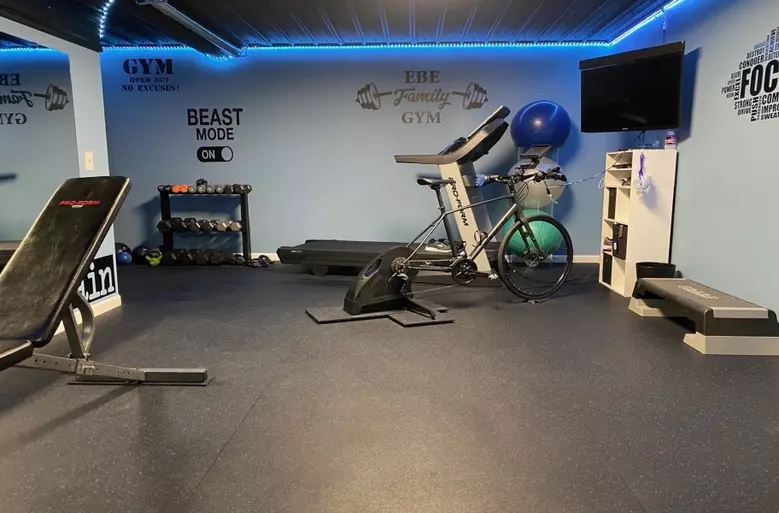
Build Your Home Gym in the Right Order
If you’re building a home gym for the first time, start with the fundamentals before buying random equipment. The strongest home gyms are built in stages—space planning first, strength equipment second, then accessories that improve performance and organization.
Step 1: Start With Your Space
Before buying equipment, make sure your garage, spare room, or basement is truly ready for training. Planning your space first prevents expensive mistakes and helps you build a gym that fits your ceiling height, flooring needs, lighting setup, and overall training goals.
• Ceiling Height Guide
• Home Gym Flooring
• Home Gym Mirrors
• Home Gym Lighting
Step 2: Build Your Strength Zone
Once your training space is ready, it’s time to build the core of your home gym. This is where your biggest strength gains happen. Focus on versatile equipment that supports compound lifts, progressive overload, pull movements, and full-body training.
• Foldable Power Rack
• Power Rack
• Pull-Up Bars
• Cable Machines
• Smith Machines
Step 3: Finish With Accessories
The right accessories bring your gym together. They improve safety, organization, comfort, and long-term consistency while helping you get more value from every workout.
• Weightlifting Belts
• Olympic Barbells
• Weight Plates
• Weight Plate Storage
IronNestHQ’s Top 3 First Moves
1. Measure your space before buying anything
A smarter home gym starts with knowing exactly how much room you have to train, grow, and move safely.
2. Protect your floors first
Quality flooring protects your investment, reduces noise, and creates the foundation for serious training.
3. Buy versatile equipment first
Start with equipment you’ll use every week—gear that builds strength, saves space, and earns its spot in your gym.
How to Build Your Home Gym the Right Way?
A home gym gives you:
- Convenience — no commute, no waiting
- Consistency — easier to stick to a routine
- Long-term savings — no monthly memberships
- Privacy — train your way
More importantly, “When you build your home gym it allows you to design a training environment that actually supports your goals.
Step 1: Define Your Training Goals
Before buying anything, get clear on what you want out of your gym.
Common Goals:
- Strength training (barbells, racks, progressive overload)
- General fitness (dumbbells, circuits, conditioning)
- Functional training (bodyweight, cables, versatility)
👉 Your goal determines everything:
- Equipment selection
- Layout
- Budget
If you skip this step, you’ll overspend on equipment you don’t use.
Step 2: Choose the Right Space
Your space is your foundation.
Common Home Gym Locations:
- Garage (best overall flexibility)
- Spare bedroom
- Basement
- Apartment corner
What to Measure:
- Ceiling height (for racks and pull-ups)
- Floor protection needs
- Wall space for storage
- Airflow and ventilation
A well-planned space prevents costly mistakes later.
Step 3: Start with High-Impact Essentials
You don’t need a full gym on day one. Focus on versatility.
Smart Starter Setup:
- Adjustable dumbbells
- Adjustable or flat bench
- Basic rubber flooring
This setup allows you to train your entire body while keeping costs low.
Step 4: Build Around a Power Rack
Once you’re ready to level up, a power rack becomes the centerpiece of your gym.
A quality rack allows you to:
- Train heavy safely
- Perform compound lifts
- Add attachments for versatility
- Progress long-term
👉 Read: Best Power Racks for Home Gyms (2026 Guide)
Step 5: Add a Barbell and Plates
This is where real strength training begins.
Focus On:
- Olympic barbell (durability + grip)
- Weight plates (iron or bumper)
- Storage solutions
👉 Read: Best Olympic Barbells for Garage Gyms (2026 Guide)
👉 Read: Best Weight Plate Storage for Home Gyms (2026 Guide)
Step 6: Increase Versatility with Cable Training
Cable systems unlock movements that free weights alone can’t provide.
Benefits:
- Controlled resistance
- Isolation exercises
- Joint-friendly movements
👉 Read: Best Cable Machines for Home Gyms (2026 Guide)
👉 Read: Best Cable Attachments for Home Gyms (2026 Guide)
Step 7: Upgrade Your Environment
This is where your gym goes from basic to elite.
Key Upgrades:
- Flooring — protects your investment
- Mirrors — improve form and confidence
- Lighting — boosts energy and visibility
- Storage — keeps your space clean and efficient
👉 Read: Best Home Gym Flooring for Beginners (2026 Guide)
👉 Read: Best Home Gym Mirrors for Garage Gyms (2026 Guide)
👉 Read: Best Home Gym Lighting for Garage Gyms (2026 Guide)
Step 8: Control Temperature and Airflow
Training in a hot or poorly ventilated space will limit performance fast.
Why It Matters:
- Prevents fatigue
- Improves endurance
- Makes workouts more enjoyable
👉 Read: Best Home Gym Ventilation Solutions (Garage Gym Airflow Guide 2026)
Step 9: Add Performance Accessories
Once your core setup is in place, accessories improve safety and output.
Recommended:
- Lifting straps
- Wrist wraps
- Weightlifting belts
- Chalk
These small additions can significantly improve your performance.
Step 10: Build Strategically Over Time
The biggest mistake beginners make is trying to build everything at once.
Instead:
- Start with essentials
- Upgrade intentionally
- Invest in quality pieces
Your gym should evolve with your goals.
Common Mistakes to Avoid
- Buying too much equipment too early
- Not measuring your space
- Ignoring flooring and protection
- Choosing low-quality equipment
- Overlooking airflow and comfort
Avoiding these mistakes saves time, money, and frustration.
Final Thoughts: Build a Gym That Actually Works for You
The difference between a home gym that gets used and one that collects dust comes down to one thing: intentional planning.
The goal isn’t to build the biggest gym or buy the most equipment — it’s to build a setup that fits your space, supports your goals, and makes it easy to stay consistent.
Start simple. A solid foundation of dumbbells, a bench, and proper flooring is more than enough to begin. From there, your next major upgrade should be a power rack and barbell setup, which will unlock the ability to train heavier, safer, and more effectively over time.
As your training evolves, layering in cable machines, attachments, and accessories will give you the versatility to train every muscle group efficiently without needing a commercial gym. At the same time, don’t overlook the environment — upgrades like proper lighting, mirrors, storage, and cooling systems are what turn a basic setup into a space you actually want to train in every day.
This is where most people get it wrong: they focus only on equipment and ignore usability. But the reality is, a well-organized, comfortable, and functional gym will outperform a cluttered, poorly planned setup every time.
That’s exactly why IronNestHQ is structured the way it is.
This page is your foundation, but the real value comes from building out your setup step-by-step using the guides linked throughout:
- Start with your foundation → power racks, barbells, and flooring
- Expand your capabilities → cable machines and attachments
- Optimize your space → mirrors, lighting, and storage
- Improve your performance → accessories and recovery tools
Each guide is designed to help you make the right decision at the right time — without wasting money or second-guessing your setup.
If you follow this approach, you won’t just build a home gym — you’ll build a system that supports long-term progress, consistency, and results.
And that’s the difference between starting strong and actually sticking with it.
Your next step is simple: pick your starting point from the guides above and begin building your gym the right way — one smart upgrade at a time.