
The best home gym fans can dramatically improve airflow, reduce heat buildup, and help you stay consistent with your workouts.
Training in a home gym — especially a garage setup — can quickly turn into a battle against heat and humidity. One minute you’re warming up, and the next you’re drenched in sweat before your workout even starts. Poor airflow doesn’t just make things uncomfortable — it kills performance, shortens workouts, and makes it harder to stay consistent.
The good news is that you don’t need an expensive HVAC system to fix it. The right fan or cooling setup can dramatically improve airflow, reduce heat buildup, and make your gym feel like a completely different space. In this guide, we’ll break down the best home gym fans and cooling systems for 2026, so you can train harder, longer, and more comfortably — no matter how hot your setup gets.
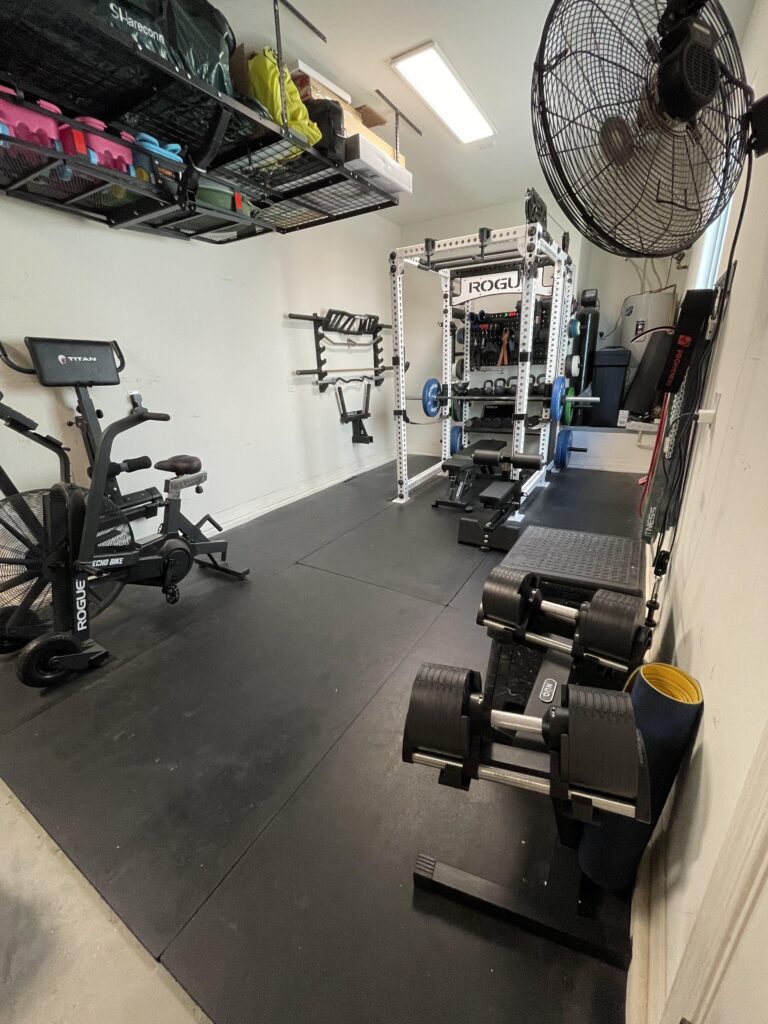
Why Cooling Matters in a Home Gym
Most home gyms lack proper ventilation compared to commercial gyms. Without airflow, heat builds up fast — especially during intense workouts.
Proper cooling helps:
- Improve endurance and performance
- Reduce fatigue during workouts
- Keep equipment dry and protected
- Make your gym usable year-round
If you train in a garage or enclosed space, cooling isn’t optional — it’s essential.
What to Look for in a Home Gym Fan
Before choosing a fan or cooling system, consider:
Airflow Power (CFM)
Higher airflow = better cooling and circulation
Adjustability
Look for fans that tilt, oscillate, or mount for directional airflow
Noise Level
Loud fans can be distracting — especially in enclosed spaces
Durability
Garage environments require rugged, long-lasting builds
Size and Placement
Floor fans, wall-mounted fans, and ceiling fans all serve different purposes
Why Home Gym Fans Matter
Home gym fans play a critical role in temperature control by improving airflow and reducing heat buildup during workouts. Without proper circulation, your gym can quickly become uncomfortable, especially in garage setups where heat and humidity build up faster.
Using the right fan or cooling system helps improve endurance, comfort, and overall workout consistency.
Lasko High Velocity Pro-Performance Utility Fan
Best Overall Home Gym Fan
Key Features:
- High velocity airflow for strong circulation
- Compact and portable design
- Multiple speed settings
- Durable build for garage environments
Why It’s Great:
This fan is one of the most popular choices for home gyms because it delivers strong, focused airflow without taking up much space. It’s perfect for directing air exactly where you need it during workouts.
Best For:
Garage gyms, small to medium spaces, and targeted cooling
Vornado 660 Whole Room Air Circulator
Best for Whole-Room Airflow
Key Features:
- Deep-pitch blades for full-room circulation
- Quiet operation
- Energy efficient
- Compact design
Why It’s Great:
Instead of blasting air in one direction, this fan circulates air throughout the entire room, making it ideal for enclosed spaces where airflow is limited.
Best For:
Spare rooms, basements, and indoor gym setups
B-Air FIRTANA-20X High Velocity Floor Fan
Best High-Power Fan for Large Spaces
Key Features:
- Industrial-grade airflow
- Adjustable tilt for directional cooling
- Metal construction for durability
- Multiple speed settings
Why It’s Great:
If you’re training in a larger garage or dealing with extreme heat, this fan delivers serious airflow that can handle demanding conditions.
Best For:
Large garages, high heat environments, intense training setups
Lasko Wall Mount Fan
Best Wall-Mounted Fan for Space Saving
Key Features:
- Wall-mounted design saves floor space
- Oscillating airflow
- Remote control functionality
- Adjustable speeds
Why It’s Great:
Perfect for smaller gyms where floor space is limited. It keeps airflow elevated and consistent without getting in your way.
Best For:
Compact gyms, smaller garages, space-saving setups
Honeywell QuietSet Whole Room Tower Fan
Best Quiet Fan for Indoor Gyms
Key Features:
- Quiet operation
- Slim, space-saving design
- Multiple speed settings
- Oscillation for even airflow
Why It’s Great:
Ideal for indoor setups where noise matters. It provides steady airflow without disrupting your environment.
Best For:
Apartments, spare rooms, shared spaces
Alternative Cooling Options
Fans are the most cost-effective solution, but depending on your environment, you may need additional support.
Portable Air Conditioners
- Best for extreme heat
- Higher cost but maximum cooling
Dehumidifiers
- Reduce humidity
- Improve comfort in hot climates
Natural Ventilation
- Open garage doors or windows
- Combine with fans for best results
How to Set Up Cooling in Your Home Gym
For best results:
- Position fans toward your main workout area
- Use multiple fans to create cross airflow
- Combine airflow with open ventilation when possible
- Elevate fans (wall-mounted or angled) for better circulation
Common Mistakes to Avoid
- Using low-power fans that don’t move enough air
- Poor placement that limits airflow effectiveness
- Ignoring humidity levels
- Blocking airflow with equipment
- Not planning for hot weather conditions
Final Thoughts
Cooling is one of the most overlooked upgrades in a home gym, but it directly impacts how often and how effectively you train. If your space is too hot, uncomfortable, or poorly ventilated, it becomes harder to stay consistent — and consistency is what drives long-term results.
For most setups, the smartest move is to start with a high-velocity fan that delivers strong, targeted airflow. This alone can dramatically improve comfort during workouts. From there, you can build a more complete cooling system by adding wall-mounted fans for better air distribution or upgrading to full-room air circulators for enclosed spaces. If you’re training in extreme heat or high humidity, layering in a portable AC unit or dehumidifier can take your setup to the next level.
What really separates an average home gym from a high-performing one is how well the environment is designed. Cooling should work together with your overall setup — including your flooring, layout, and airflow strategy — to create a space that keeps you training consistently year-round. If your gym feels better, you will use it more often. It’s that simple.
To build a complete training environment, make sure your cooling setup works alongside other key upgrades. Pair your airflow improvements with proper flooring from our Best Home Gym Flooring for Beginners (2026 Guide) to protect your space, and enhance visibility and motivation with our Best Home Gym Lighting for Garage Gyms (2026 Guide). You can also improve your setup further with proper positioning and visibility using our Best Home Gym Mirrors for Garage Gyms (2026 Guide).
If you’re just getting started or upgrading your space, your cooling system should be treated as a core part of your setup — not an afterthought. When combined with the right equipment, smart layout, and environment upgrades, it helps create a home gym that is not only functional, but one that you actually enjoy using every day.
The goal is simple: build a space that keeps you comfortable, consistent, and progressing — no matter the conditions.