
A shared garage gym can be one of the most practical setups — but only if it is planned correctly.
The biggest mistake people make is treating the garage like it is only a gym. In reality, the space often still needs to support storage, tools, parking, and daily movement. If the gym takes over everything, the setup quickly becomes frustrating and difficult to use consistently.
The goal is not to build the biggest setup possible. The goal is to build a space that works for both training and everyday use for a shared garage gym setup.
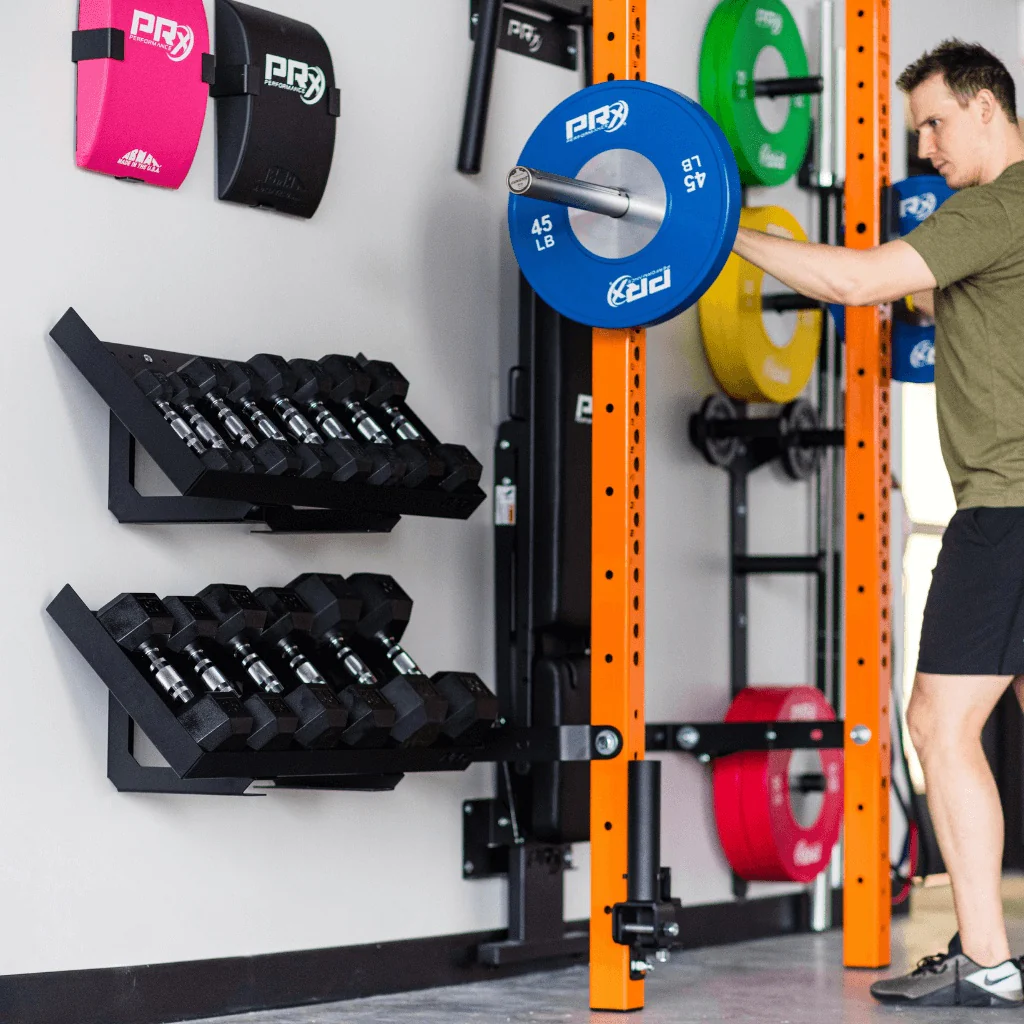
How to Set Up a Shared Garage Gym the Right Way
When planning a shared garage gym setup, the goal is to balance functionality with space efficiency. Unlike a dedicated gym, a shared space needs to serve multiple purposes while still allowing you to train effectively.
Start by identifying how much usable space you actually have once vehicles, storage, and walkways are accounted for. From there, prioritize equipment that offers versatility without taking up unnecessary room.
Wall-mounted storage, foldable racks, and compact equipment can make a major difference in keeping your gym organized while maintaining flexibility for everyday use.
Common Mistakes When Setting Up a Shared Garage Gym
One of the biggest mistakes people make is trying to fit too much equipment into a limited space. This quickly leads to a cluttered setup that is difficult to use and maintain.
Another common issue is poor organization. Without proper storage solutions, equipment ends up on the floor, creating both safety hazards and workflow problems.
Ignoring flooring is also a mistake. Proper gym flooring protects your space, reduces noise, and makes the environment more comfortable for training.
Planning ahead and focusing on efficiency will always result in a better long-term setup.
Benefits of a Shared Garage Gym Setup
A shared garage gym setup allows you to train consistently while still using your garage for storage or parking. The key is balancing functionality and space so that your setup works for everyday life.
Start by Defining Garage Zones
Before placing any equipment, the garage needs structure. A properly planned shared garage gym setup helps you stay consistent with your workouts while keeping your space functional.
Most shared garages need to support:
- workout space
- storage space
- walking paths
- access to walls, shelves, and doors
- sometimes vehicle space
Instead of treating the garage as one open area, divide it into zones:
- equipment zone along one wall
- storage or utility zone
- open training area
- clear walking path
This creates a more organized layout and prevents the gym from interfering with the rest of the space.
Choose Equipment That Fits the Space
In a shared garage, every piece of equipment needs to justify its footprint.
The best approach is to use equipment that:
- supports multiple exercises
- stores efficiently
- does not dominate the entire space
Good options typically include:
- adjustable dumbbells
- an adjustable bench
- compact or foldable rack options
- cable systems that provide versatility
- vertical or wall-based storage
Avoid adding multiple pieces of equipment that serve the same purpose. A smaller, more efficient setup will almost always perform better in a shared space.
Flooring Helps Define the Gym Area
Flooring is one of the most important upgrades in a shared garage.
It does more than protect the floor. It creates a clear training zone within a multipurpose space.
Good flooring:
- absorbs impact
- reduces vibration
- improves stability
- visually separates the gym from other areas
Without flooring, the gym can feel temporary and disconnected. With it, the space becomes more intentional and easier to use.
Keep the Center Open
The center of the garage is the most valuable space.
When the middle area is open, it allows for:
- lifting
- bodyweight exercises
- stretching
- transitions between movements
To protect this space:
- place larger equipment along walls
- use vertical storage
- avoid cluttering the center
An open center makes the garage feel larger and keeps workouts more flexible.
Use Wall Storage to Save Space
Floor space is limited in a shared garage.
Wall storage helps:
- keep equipment off the ground
- reduce clutter
- improve safety
- make the gym easier to use
Common solutions include:
- plate storage mounted to walls
- vertical dumbbell racks
- hooks for bands and attachments
- bar storage systems
The more you move off the floor, the more functional the space becomes.
Plan Around Garage Door and Ceiling Space
Garage layouts come with built-in limitations.
Before finalizing your setup, account for:
- garage door track movement
- ceiling height
- lighting placement
- overhead clearance
This is especially important for racks, pull-ups, and overhead lifts. If you ignore vertical space, your setup may not function the way you expect.
Reduce Friction Between Uses
A shared garage gym should be easy to switch between uses.
If every workout requires moving multiple items or resetting the space, consistency becomes harder.
To reduce friction:
- keep frequently used equipment accessible
- avoid oversized equipment that blocks movement
- limit unnecessary accessories
- keep your layout simple
The easier it is to start a workout, the more likely you are to stay consistent.
Environment Still Matters
Even in a shared garage, the environment plays a major role.
Pay attention to:
- temperature
- airflow
- lighting
- noise
If the space feels uncomfortable, it becomes harder to use regularly. A well-balanced environment makes the gym more inviting and easier to maintain long term.
FAQ
Can a shared garage still work as a home gym?
Yes. With proper layout and equipment choices, a shared garage can be highly effective.
What equipment works best in a shared garage?
Compact and versatile equipment that supports multiple exercises.
Should the gym be in the center of the garage?
No. Keeping the center open usually works best for flexibility and movement.
Is flooring necessary in a shared garage gym?
Yes. It improves stability, reduces noise, and defines the workout area.
How do we keep the garage from getting cluttered?
Use wall storage, limit duplicate equipment, and keep the center open.
Can we still train seriously in a shared garage?
Yes. A well-planned setup can fully support strength training and conditioning.
Can you park a car in a garage gym?
Yes, a shared garage gym can still allow for parking if you use foldable equipment, wall storage, and a smart layout that keeps the floor space flexible.
Final Thoughts
A shared garage gym works best when the setup respects the space.
The goal is not to fill the garage with as much equipment as possible. It is to create a system where training and everyday use can coexist without conflict. When the layout is clear, the storage is organized, and the equipment fits the space, the entire setup becomes easier to use and maintain.
This is where everything connects across our IronNestHQ system.
Our Best Home Gym Flooring for Beginners (2026 Guide) helps establish a stable, defined training area that reduces noise and improves performance. Home Gym Flooring Maintenance & Cleaning (Keep Your Gym Looking New 2026) supports long-term durability and consistency.
From there, organization becomes critical. Best Weight Plate Storage for Home Gyms (2026 Guide) and Best Wall Mounted Storage for Garage Gyms (2026 Guide) help keep the floor clear and the layout efficient. Best Home Gym Cable Attachments (2026 Guide) ensures accessories do not create clutter or unnecessary movement.
Equipment choice plays a major role as well. Best Foldable Power Rack for Garage Gyms (2026 Guide) supports space-saving strength training, while Best Cable Machines for Home Gyms (2026 Guide) adds versatility without overcrowding the space. Best Home Gym Equipment for Apartments (Low Noise + Space-Saving Options) – 2026 Guide also applies here by focusing on compact, efficient equipment.
Best Home Gym Fans and Cooling Systems (Stay Cool While Training 2026)The environment ties everything together. Home Gym Temperature Control (How to Keep Your Gym Cool in Any Season), Best Home Gym Ventilation Solutions (Garage Gym Airflow Guide 2026), Best Home Gym Fans and Cooling Systems (Stay Cool While Training 2026), Best Home Gym Lighting for Garage Gyms (2026 Guide), Home Gym Electrical & Outlet Setup (Power, Lighting & Safety Guide 2026), and How to Reduce Home Gym Noise Without Full Soundproofing (2026 Guide) all contribute to making the space more usable and consistent.
That is the real advantage of a well-built shared garage gym.
When everything works together — layout, flooring, storage, equipment, and environment — the space becomes more than just functional. It becomes a place that is easy to use, easy to maintain, and easy to return to day after day.
At the end of the day, the best shared garage gym is not the one with the most equipment. It is the one that stays organized, flexible, and consistent over time.