
Building a home gym in phases is one of the smartest — and most effective — ways to create a setup that actually works long term.
Most people rush the process. They try to build everything at once, buying racks, benches, machines, and accessories without a clear plan. At first, it feels like progress. But over time, the problems start to show.
The space becomes crowded. Equipment goes unused. Upgrades become harder. And money gets wasted on pieces that never should have been purchased in the first place.
This is where most home gyms go wrong.
The issue is not budget, and it is not access to equipment.
It is the lack of a structured, phased approach.
Building a home gym in phases allows you to prioritize what matters, avoid unnecessary purchases, and create a setup that grows with your training instead of working against it. When done correctly, each phase builds on the last, making your gym more efficient, more organized, and more effective over time.
In this guide, we break down exactly how to build a home gym in phases, what to prioritize at each stage, and how to avoid costly mistakes.
A well-planned home gym in phases approach not only saves money, but also ensures your space stays efficient, organized, and built for long-term progress.
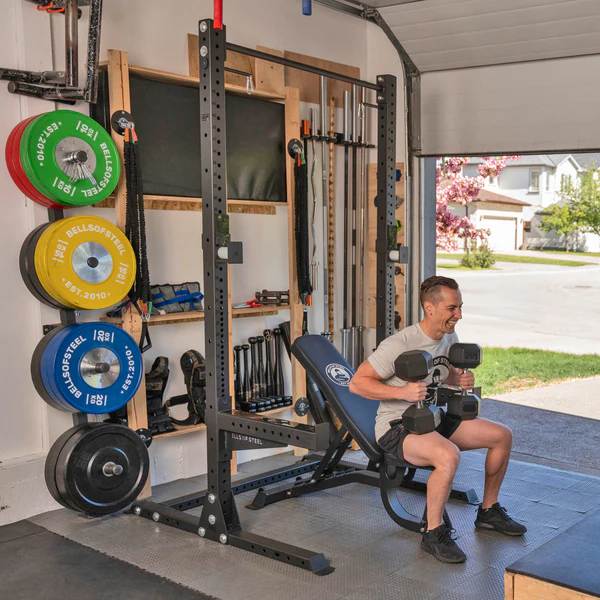
Why Building a Home Gym in Phases Matters
Building a home gym in phases helps you avoid one of the biggest mistakes beginners make — buying too much too soon.
Instead of guessing what you need, you learn as you go. This allows you to:
- Spend money more efficiently
- Avoid equipment that does not fit your training style
- Keep your space organized
- Build a setup that evolves over time
A phased home gym setup also makes upgrades easier. Each decision is intentional, and each addition fits into your overall system instead of disrupting it.
Phase 1: Build Your Foundation First
The first phase is all about creating a functional base.
Focus on versatile, high-impact equipment that allows you to train effectively without overcomplicating your setup.
Start with:
- Adjustable dumbbells or a starter weight set
- A flat or adjustable bench
- High-quality flooring
- Basic storage solutions
Flooring is one of the most important parts of this phase. Without it, noise, vibration, and equipment wear become immediate problems. This is why your Best Home Gym Flooring for Beginners (2026 Guide) should be one of your first priorities.
This phase should give you everything you need to train consistently without filling your space too quickly.
Phase 2: Add Structure and Strength Equipment
Once your foundation is established, the next step is adding structure to your gym.
This is where strength training becomes more advanced and more efficient.
Key additions include:
- A power rack or squat rack
- A barbell and weight plates
- Plate storage solutions
- Safety accessories
A rack becomes the centerpiece of your gym. It allows you to perform compound movements safely and progress over time.
If space is limited, your Best Foldable Power Rack for Garage Gyms (2026 Guide) helps you maximize functionality without sacrificing room.
At this stage, organization becomes critical. Using solutions from Best Weight Plate Storage for Home Gyms (2026 Guide) keeps your setup clean and reduces unnecessary noise and clutter.
Phase 3: Expand With Versatility and Accessories
Once your core setup is complete, it is time to expand your training options.
This phase focuses on versatility without adding unnecessary bulk.
Consider adding:
- Cable systems or pulley attachments
- Landmine attachments
- Resistance bands
- Specialty bars
These additions increase the variety of exercises you can perform without taking up excessive space.
Your Best Home Gym Cable Attachments (2026 Guide) is a perfect example of how small upgrades can significantly improve your training experience.
This is where your gym starts to feel more complete and dynamic.
Phase 4: Add Cardio Equipment the Right Way
Cardio equipment is often added too early, which can overcrowd your space.
Instead, introduce cardio after your strength setup is established.
Options include:
- Treadmills
- Rowing machines
- Exercise bikes
Adding cardio at this stage allows you to choose equipment that fits your layout instead of forcing it into your space.
It also helps you maintain balance between strength training and conditioning without sacrificing efficiency.
Phase 5: Optimize and Personalize Your Space
The final phase is about refining your gym and making it work perfectly for you.
This includes:
- Improving lighting
- Adding mirrors
- Enhancing ventilation and airflow
- Upgrading storage and organization
This phase is where small improvements make a big difference.
Your gym transitions from functional to fully optimized, making it easier to stay consistent and enjoy your workouts.
Common Mistakes When Building a Home Gym in Phases
Even with a phased approach, mistakes can still happen if you are not intentional.
Common home gym planning mistakes include:
- Buying equipment too early
- Skipping foundational elements like flooring
- Overcrowding your space
- Not planning for future upgrades
- Choosing equipment that does not match your training style
Avoiding these mistakes is what separates a well-built gym from one that feels cluttered and inefficient.
How to Plan Your Home Gym Setup Strategy
To successfully build a home gym in phases, you need a clear strategy.
Focus on:
- Starting with versatile equipment
- Leaving space for expansion
- Prioritizing quality over quantity
- Choosing equipment that works together
Think of your gym as a system, not a collection of random pieces.
When everything works together, your space becomes more efficient, easier to use, and more effective over time.
Frequently Asked Questions
Is building a home gym in phases better than buying everything at once?
Yes, building a home gym in phases helps you avoid wasting money and allows you to create a setup that evolves with your training.
What should I buy first when building a home gym?
Start with versatile equipment like dumbbells, a bench, and proper flooring. These give you the most flexibility early on.
How long should each phase take?
Each phase depends on your budget and goals. There is no fixed timeline, but each step should be intentional.
Can I skip phases when building a home gym?
You can adjust phases, but skipping foundational steps often leads to problems later.
Final Thoughts
Building a home gym in phases is not just about saving money — it is about building a smarter, more effective training environment from the ground up.
When you try to do everything at once, mistakes happen. Equipment gets purchased without a clear purpose, space becomes limited, and your setup becomes harder to use over time. A phased approach eliminates those problems by giving each decision a purpose.
Start with your foundation. Your flooring and core equipment set the tone for everything that follows, which is why our Best Home Gym Flooring for Beginners (2026 Guide) should be one of your first priorities. From there, move into strength-focused equipment that adds structure and progression to your workouts.
As your gym grows, versatility becomes the focus. Smaller additions like those covered in Best Home Gym Cable Attachments (2026 Guide) allow you to expand your training without overwhelming your space. At the same time, maintaining organization with solutions from Best Weight Plate Storage for Home Gyms (2026 Guide) keeps your setup efficient and controlled.
A well-planned home gym in phases approach ensures that every piece of equipment has a purpose and every upgrade moves your setup forward.
At the end of the day, the goal is not to build the biggest gym.
It is to build the right gym — one that supports consistency, adapts as you progress, and delivers real results without wasted money or unnecessary complexity.