
Before you build your home gym, there’s one question that can make or break your entire setup: do you actually have enough ceiling height?
A lot of people assume their garage or basement will work—until they try overhead presses, pull-ups, or install a rack and realize they don’t have the space they need.
It comes down to ceiling height. This is why understanding the right home gym ceiling height is critical before you buy equipment or start your setup.
People assume their space will “just work,” only to realize too late that overhead lifts feel restricted, pull-ups become impossible, and expensive equipment doesn’t fit the way they planned.
This is one of the most common (and most expensive) mistakes when planning a home gym.
If your ceiling height isn’t right, your entire setup becomes limited — no matter how good your equipment is.
In this guide, we’ll break down exactly how much ceiling height you need for a home gym, what mistakes to avoid, and how to build a setup that actually works from day one.
Why Home Gym Ceiling Height Matters
Your home gym ceiling height directly impacts what exercises you can perform and how safely you can perform them.
If your ceiling is too low, you may run into:
- Limited range of motion during lifts
- Unsafe overhead movements
- Inability to use certain equipment
- Awkward or inefficient workout flow
This is especially important for movements like overhead presses, pull-ups, and Olympic lifts, where vertical space is critical.
A properly planned home gym ceiling height setup ensures you can train freely without constantly adjusting or restricting your movements.
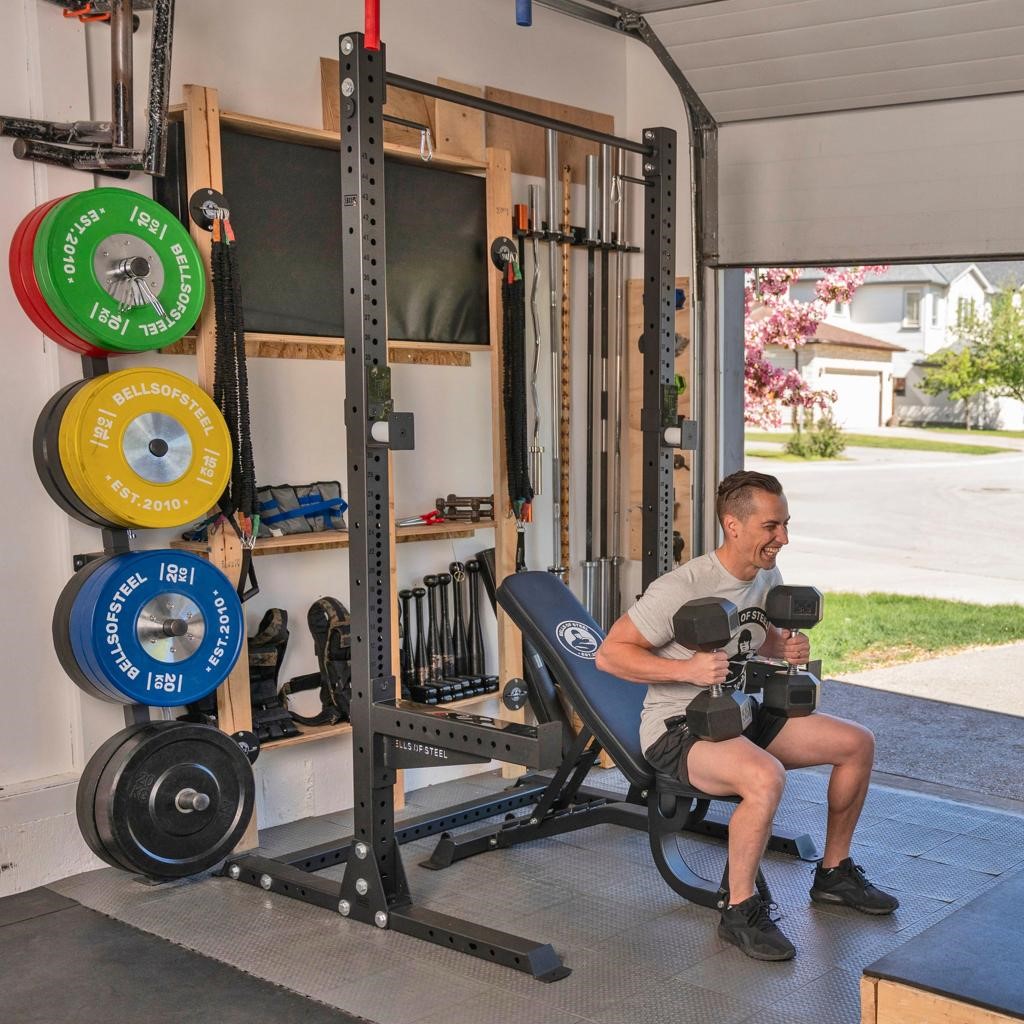
Minimum Ceiling Height for a Home Gym
For most home gyms, the recommended minimum home gym ceiling height is:
- 7 feet (absolute minimum): Very limited, restricts many movements
- 8 feet (standard): Works for basic setups, limited overhead lifts
- 9 feet (ideal): Allows most exercises comfortably
- 10+ feet (optimal): Full flexibility for all training styles
An 8-foot ceiling is common in many homes, but it requires careful planning. Taller individuals or those performing overhead movements will quickly feel the limitations.
A 9-foot ceiling provides a much more comfortable experience and allows for greater exercise variety.
Home Gym Ceiling Height Requirements for Common Exercises
Different exercises require different amounts of vertical space, and this is where many home gym setups run into problems. If your ceiling is too low, you may be forced to adjust your form or avoid certain movements entirely.
Overhead Press
Overhead pressing requires full extension of your arms above your head, along with additional clearance for the barbell or dumbbells. If your ceiling is too low, you’ll either shorten your range of motion or avoid the lift altogether — both of which limit strength development over time.
Pull-Ups
Pull-ups require more clearance than most people expect. If your ceiling height allows for it, take a look at our Best Foldable Power Rack for Garage Gyms guide to find a rack that fits your space properly. You need space not just for the bar, but also for your head and full body movement. In low ceilings, pull-up bars often have to be mounted lower, which can reduce effectiveness or force modified movements.
Barbell Movements
Exercises like squats and deadlifts may seem less dependent on ceiling height, but loading plates onto a barbell inside a rack still requires vertical space. Taller racks or attachments can quickly become an issue in tighter spaces.
Cable Machines and Attachments
Cable machines, especially those with lat pulldown functionality, require overhead clearance to operate correctly. If your ceiling is too low, you may not be able to fully extend the cable path, limiting the effectiveness of the machine.
Real Home Gym Ceiling Height Examples for Different Setups
Understanding ceiling height is easier when you look at real-world scenarios. Here’s how different ceiling heights actually impact your setup and training.
8-Foot Ceiling
An 8-foot ceiling is common in garages and spare rooms, but it comes with limitations. Overhead movements like shoulder press can feel restricted, especially for taller individuals. Pull-up bars often need to be mounted carefully or replaced with lower-profile options.
9-Foot Ceiling
A 9-foot ceiling is the sweet spot for most home gym setups. It allows for full range of motion on overhead lifts and supports standard power racks and cable machines without major compromises. Most users will find this height ideal for both strength training and versatility.
10-Foot Ceiling and Above
If you have 10-foot ceilings or higher, you have full flexibility. You can install taller racks, dedicated pull-up stations, and overhead cable systems without worrying about clearance. This is the closest you can get to a commercial gym feel at home.
Choosing the correct home gym ceiling height for your space ensures you can train effectively without limitations.
Equipment That Impacts Ceiling Height
Certain equipment requires more vertical clearance than others. Your ceiling height will also directly impact the type of equipment you can use. Taller setups like power racks, cable machines, and pull-up bars require additional vertical clearance to function properly. If you’re still deciding on equipment, check out our Best Foldable Power Rack for Garage Gyms guide and our Best Cable Machines for Home Gyms guide to find options that fit your space without limiting your workouts.
Power Racks
- Standard height: 80–90 inches
- Some racks exceed 90 inches
Pull-Up Bars
- Mounted above head height
- Require additional clearance above the bar
Cable Machines
- Often tall and fixed height
- Limited flexibility once installed
Cardio Equipment
- Treadmills add user height + stride motion
- Rowers require less vertical clearance
Always account for both equipment height and user height when planning. For general safety and exercise guidelines, you can also review recommendations from the American Council on Exercise (ACE).https://www.acefitness.org/
How to Work With Low Ceilings
If your ceiling is 7–8 feet, you can still build an effective home gym — you just need to adjust your setup.
Strategies include:
- Use shorter power racks or squat stands
- Perform seated overhead presses
- Avoid Olympic lifts or modify movements
- Choose compact equipment
- Focus on dumbbell and cable exercises
A lower ceiling does not prevent you from building a great gym. It just requires smarter planning.
How to Measure Your Space Correctly
Before buying any equipment, measure your space accurately.
Steps:
- Measure floor-to-ceiling height
- Account for flooring thickness
- Consider equipment height
- Add user height + movement clearance
Always leave extra space for safety.
Planning your home gym ceiling height correctly prevents costly mistakes and unnecessary returns.
Common Ceiling Height Mistakes to Avoid
Many home gym setups run into the same issues.
Avoid:
- Buying tall equipment without measuring
- Ignoring overhead movement clearance
- Assuming standard ceilings are enough
- Not accounting for flooring thickness
- Overcrowding vertical space
These mistakes can limit your training and make your gym harder to use.
How Ceiling Height Affects Layout and Setup
Ceiling height is not just about clearance — it also affects your entire layout.
A well-planned space:
- Positions tall equipment strategically
- Keeps overhead movements in open areas
- Avoids placing racks under low beams
- Maintains safe spacing between equipment
This is where your setup becomes more than just equipment placement — it becomes a system.
Frequently Asked Questions
What is the minimum ceiling height for a home gym?
The minimum ceiling height for a home gym is typically 8 feet, but this comes with limitations. At this height, overhead exercises like shoulder press and pull-ups may feel restricted, especially for taller individuals. For a more versatile setup that allows full range of motion and accommodates equipment like power racks and cable machines, a 9-foot ceiling is ideal.
Can I do overhead press with an 8-foot ceiling?
Yes, but it may feel limited depending on your height and barbell setup.
What ceiling height is best for a garage gym?
Most garage gyms work best with 9 feet or more for full exercise flexibility.
Can I build a home gym with low ceilings?
Yes, but you will need to adjust equipment choices and exercise selection.
Final Thoughts
Ceiling height is one of the most overlooked factors in building a home gym, but it has a direct impact on every workout you perform. If you don’t plan for proper clearance, even the best equipment will feel limited and force you to adjust your training.
Getting this right from the beginning allows you to train without restrictions, use your full range of motion, and build a setup that actually supports your long-term goals. A well-planned space doesn’t just improve performance — it prevents costly mistakes and equipment limitations down the line.
Getting your home gym ceiling height right from the start is one of the most important decisions you’ll make in your entire setup.
To continue building your setup the right way, connect this guide with our Best Foldable Power Rack for Garage Gyms guide, our Best Cable Machines for Home Gyms guide, and our Best Home Gym Flooring for Beginners guide. Each one will help you make smarter decisions and create a gym that works exactly how you need it to.