
Most people focus on what equipment to buy when building a home gym, but the real difference between a setup that works and one that doesn’t comes down to layout. You can have the best equipment available, but if your space is poorly organized, your workouts will feel inefficient, cramped, and frustrating.
A well-planned home gym layout does more than just look clean—it directly impacts how you train. It affects your movement, your safety, and your ability to stay consistent over time. When your layout is built around your training style, everything flows naturally. You’re not wasting time moving equipment, adjusting positions, or working around limitations.
The goal isn’t to create the biggest gym possible. It’s to create a space that works for how you train every single day. Whether your focus is strength training, functional fitness, or a mix of both, your layout should support your routine—not fight against it.
In this guide, we’ll break down how to plan your home gym layout around your training style so you can build a setup that is efficient, organized, and built for long-term success.
Why Your Home Gym Layout Matters More Than You Think
Your layout determines how easy—or difficult—it is to train consistently. A poorly designed space leads to constant interruptions, wasted time, and unnecessary frustration.
When your gym is laid out correctly, everything has a purpose and a place. You move smoothly from one exercise to the next, your equipment is always accessible, and your workouts feel more structured.
A good layout also improves safety. Having enough space around your equipment reduces the risk of injury and allows you to train with confidence, especially when using heavier weights.
Over time, these small advantages add up. A better layout leads to better workouts, which leads to better results.
Identifying Your Training Style First
Before you start moving equipment around, you need to understand how you actually train. Your layout should reflect your habits, not an ideal version of your workouts.
If your focus is strength training, your gym should revolve around a central lifting area. This includes your power rack, barbell, bench, and weight plates. You’ll want enough room to load weights, step back safely, and perform compound movements without restriction.
If you prefer functional training or HIIT-style workouts, open space becomes the priority. You’ll need room for movement, circuits, and bodyweight exercises. Large equipment should be minimized or pushed to the edges.
For hybrid training styles, the goal is balance. You’ll need a defined strength area along with a separate space for movement and conditioning. This type of setup requires more planning but offers the most versatility.
Creating Zones in Your Home Gym
One of the most effective ways to design your layout is by dividing your gym into zones. This creates structure and makes your workouts more efficient.
Your strength zone should include your main lifting equipment. This is typically the centerpiece of your gym and should have the most space around it.
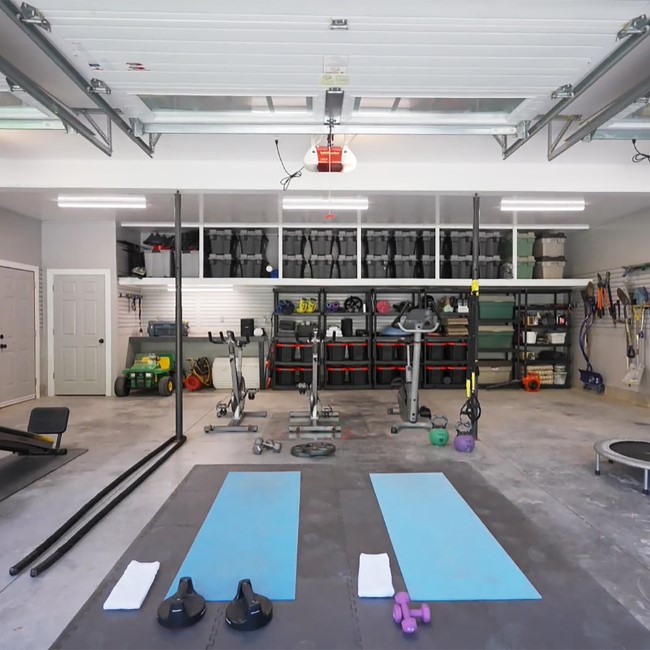
Your storage zone is just as important. Keeping plates, barbells, and accessories off the floor prevents clutter and improves safety. Wall-mounted storage is one of the best upgrades you can make.
Your movement zone is your open space. This is where you’ll perform stretching, bodyweight exercises, or conditioning work. Even in smaller gyms, having a small open area makes a big difference.
When these zones are clearly defined, your gym feels organized and functional instead of crowded.
How to Maximize Space Without Sacrificing Performance
Space is one of the biggest limitations in any home gym, especially in a garage. The key is making smart decisions that maximize usability without restricting your workouts.
Start by prioritizing multi-functional equipment. Adjustable benches, cable systems, and compact racks can replace multiple standalone machines.
Use vertical space as much as possible. Wall-mounted storage keeps your floor clear and makes your gym feel larger than it actually is.
Avoid overcrowding your space. It’s better to have fewer pieces of high-quality equipment that you use regularly than a crowded setup that limits your movement.
Planning your layout with intention will always outperform simply adding more equipment.
Layout Tips for Garage Gyms
Garage gyms come with unique challenges, especially if the space is shared or used for storage.
Position your main equipment along walls to keep the center of the garage open. This allows for better movement and flexibility.
If you need to maintain parking space, consider foldable racks or compact equipment that can be moved when needed.
Lighting and flooring also play a role in your layout. Good lighting improves visibility, while proper flooring protects your space and reduces noise.
A well-planned garage gym should feel organized, not temporary.
Common Mistakes to Avoid
Trying to do too much with too little space is one of the most common mistakes. This leads to clutter and reduces the effectiveness of your workouts.
Another issue is ignoring workflow. If your layout forces you to constantly adjust or move equipment, it’s not working.
Poor storage is another major problem. Equipment left on the floor quickly creates chaos and makes your gym harder to use.
Avoiding these mistakes will save you time, money, and frustration.
Frequently Asked Questions About Home Gym Layouts
How do I plan a home gym layout for a small space?
Focus on efficiency. Use compact equipment, prioritize vertical storage, and keep your floor space as open as possible. A small, well-organized gym can be just as effective as a larger one.
What is the best layout for a garage gym?
The best layout places your main lifting equipment along the walls and keeps the center open for movement. This creates flexibility and improves workflow.
Should I organize my gym by equipment or workout style?
Organizing by workout style is usually more effective. Grouping equipment based on how you train helps create a smoother and more efficient experience.
How much space do I really need for a home gym?
You don’t need a large space to build an effective gym. The key is using your available space efficiently and avoiding unnecessary equipment.
How do I keep my home gym organized?
Use wall-mounted storage, keep frequently used equipment easily accessible, and avoid letting items accumulate on the floor.
Can I have a full gym in a shared garage?
Yes. With proper planning, storage, and space-saving equipment, a shared garage can function as a highly effective home gym.
Final Thoughts
Planning your home gym layout around your training style is one of the most important decisions you can make when building your setup. It’s what determines whether your gym feels efficient and easy to use—or frustrating and limiting.
The goal isn’t to create a space that looks impressive. It’s to build a layout that supports your workouts, keeps you consistent, and allows you to train without unnecessary obstacles. When your gym is designed around how you actually train, everything becomes easier—from setting up your workouts to staying motivated over time.
To build a complete setup that works with your layout, start with a strong foundation from our Best Power Racks for Home Gyms (2026 Guide). Add versatility with our Best Adjustable Weight Benches for Home Gyms (2026 Guide), and expand your training options with our Best Cable Machines for Home Gyms (2026 Guide). Keep your space organized with our Best Wall Mounted Storage for Garage Gyms (2026 Guide), and protect your setup with our Best Home Gym Flooring for Beginners (2026 Guide). For even more flexibility, consider options from our Best Home Gym Cable Attachments (2026 Guide).
When everything works together—your layout, your equipment, and your training style—your home gym becomes more than just a place to work out. It becomes a system built for long-term progress, consistency, and results.