
Home gym noise reduction is one of the most overlooked — yet most important — parts of building a workout space that actually works.
Most people focus on equipment first. They invest in racks, benches, and weights, expecting everything else to fall into place. But when noise becomes an issue, the entire experience changes.
This is where problems start to show up.
Workouts feel disruptive. Sound travels through walls and floors. Equipment vibrations carry into other rooms. What should be a focused training session turns into something that feels stressful or inconvenient.
The issue is not just how loud your gym is.
It is how sound moves through your space and how your setup either controls it or makes it worse.
The good news is most home gym noise problems are completely avoidable. You do not need full soundproofing or expensive upgrades to make a significant improvement. With the right setup, you can reduce vibration, limit echo, and create a quieter, more controlled training environment.
In this guide, we break down the most effective home gym noise reduction strategies, what causes noise to build up, and how to fix it without full soundproofing.
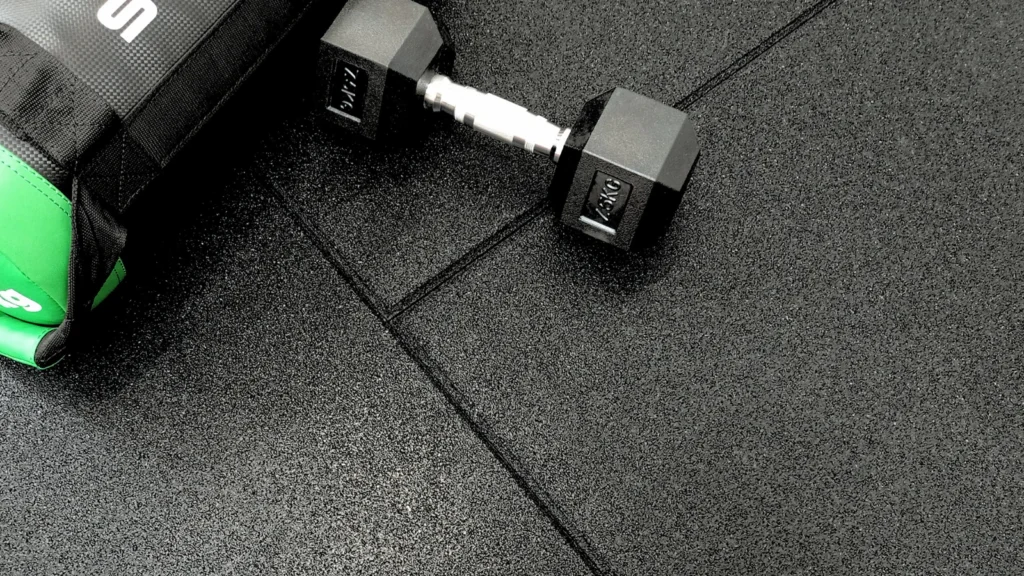
Why Home Gym Noise Reduction Matters More Than You Think
Proper home gym noise reduction is not just about keeping things quiet — it directly impacts how often and how effectively you train. When noise is controlled, workouts feel more focused, less disruptive, and easier to stay consistent with over time.
In many home setups, sound travels through floors, walls, and equipment much more than people expect. Proper home gym noise reduction not only improves comfort but also makes your workouts more consistent and enjoyable over time. Without the right setup, even small movements can create unnecessary vibration and echo. This is why home gym noise reduction should be part of your setup from the beginning, not something you try to fix later.
Why Home Gym Noise Adds Up Quickly
Home gym noise is rarely caused by one major problem. It is usually the result of several smaller issues happening at the same time.
Common contributors include:
- Hard flooring that amplifies impact
- Weights being dropped or set down too aggressively
- Plates and attachments rattling during movement
- Equipment shifting or wobbling during use
- Cardio machines creating vibration through the floor
- Open space causing echo, especially in garages
When these factors combine, the result is a gym that feels much louder than expected.
This is why two home gyms with similar equipment can feel completely different. One may feel controlled and quiet, while the other feels harsh and disruptive. The difference almost always comes down to how the space is set up and how the equipment interacts with that space.
Home Gym Noise Reduction Strategies That Actually Work
If your home gym is too loud, the issue usually comes down to vibration, impact, and sound reflection — not just volume. Effective home gym noise reduction focuses on controlling how sound travels through your floors, walls, and equipment.
The good news is you do not need full soundproofing to make a major difference. Most noise problems can be reduced significantly with the right setup decisions.
The strategies below target the biggest causes of noise in home gyms, including dropped weights, machine vibration, echo in open spaces, and sound transfer into other rooms. By improving flooring, adjusting equipment placement, and making small changes to how you train, you can create a quieter, more controlled workout environment.
Whether you are setting up a garage gym, spare room, or shared space, these home gym noise reduction techniques will help you train consistently without disturbing others in your home.
Flooring Is the Most Important Starting Point
If your gym feels loud, flooring is usually the biggest reason.
Concrete, tile, or thin flooring surfaces reflect sound and allow vibration to travel. Every time you set down a dumbbell, re-rack a barbell, or step during cardio, that impact spreads through the room.
Upgrading your flooring helps:
- Absorb impact from weights
- Reduce vibration traveling through the floor
- Create a more stable lifting surface
- Minimize sharp, harsh sound
This becomes even more important as your gym grows and you begin using heavier equipment like barbells, racks, and plate-loaded machines.
Flooring is not just about protecting your space — it directly affects how your gym feels during every workout. This is why our Best Home Gym Flooring for Beginners (2026 Guide) should be treated as a foundational piece of your setup, along with our Home Gym Flooring Maintenance & Cleaning (Keep Your Gym Looking New 2026) article to keep performance consistent over time.
Layout and Spacing Can Either Reduce or Amplify Noise
Layout plays a bigger role in noise than most people expect.
When equipment is pushed too close together, placed in corners, or set up without enough space to move, sound becomes more concentrated. This leads to more contact between equipment, more vibration, and more echo.
A better layout helps control noise by:
- Keeping your main lifting area open
- Allowing space between equipment
- Preventing accidental contact between weights and machines
- Reducing echo by breaking up open space
- Improving overall movement and workflow
Spacing also helps reduce rushed or awkward movements, which often lead to unnecessary noise during transitions.
A well-planned layout does not just improve efficiency — it creates a more controlled environment where sound is naturally reduced. This is why layout, storage, and equipment placement should always be considered together as part of one system.
Equipment Stability Makes a Noticeable Difference
Unstable equipment creates noise even when you are not dropping weights.
If a bench shifts, a rack rattles, or attachments move during use, that constant movement adds to the overall sound of your gym. Over time, this makes the space feel less controlled and more chaotic.
Focus on:
- Keeping equipment on level surfaces
- Tightening bolts, collars, and adjustable parts
- Using equipment that sits firmly on the floor
- Avoiding unnecessary movement during exercises
Stable equipment not only reduces noise but also improves safety and performance. This is where your product-focused articles on racks, benches, and machines come into play, since higher-quality equipment tends to produce less movement and less noise.
Controlling Impact During Workouts Is Critical
One of the biggest sources of noise is how equipment is handled.
Dropping dumbbells, slamming barbells into racks, or letting plates collide repeatedly creates sharp, high-impact noise. Even if each individual movement seems small, the repetition adds up quickly.
Reducing impact comes down to control:
- Set weights down instead of dropping them
- Re-rack barbells with intention
- Avoid letting plates bang together
- Slow down transitions between exercises
- Focus on controlled movement throughout your workout
This is one of the easiest ways to reduce noise immediately without spending money. It also improves the overall quality of your training.
Organization and Storage Eliminate Unnecessary Noise
Clutter creates noise.
Loose plates, scattered dumbbells, and unorganized attachments all lead to extra movement, accidental contact, and constant clanging. This makes your gym feel louder before you even start your workout.
Better organization helps:
- Eliminate unnecessary metal-on-metal contact
- Prevent weights from shifting or rolling
- Reduce setup time between exercises
- Keep your space controlled and efficient
A well-organized gym should include:
- Plate storage near your rack
- A dedicated dumbbell area
- Hooks or bins for attachments
- Secure storage for bars and accessories
This ties directly into our Best Weight Plate Storage for Home Gyms (2026 Guide) and Best Home Gym Cable Attachments (2026 Guide), both of which support a quieter and more efficient setup.
Cardio Equipment Creates Ongoing Vibration
Cardio equipment is often overlooked when it comes to noise, but it can be a constant source of vibration.
Treadmills, bikes, and rowers create:
- Repetitive impact
- Continuous vibration through the floor
- Mechanical noise over time
Even if it seems quieter than lifting weights, the constant motion can be disruptive, especially in shared spaces.
To reduce this:
- Place cardio equipment on proper flooring
- Keep it away from shared walls
- Ensure it is stable and not shifting during use
This helps limit how much vibration travels through your home.
Garage Gyms Require Extra Attention
Garage gyms naturally amplify sound.
Concrete floors, open layouts, and minimal insulation all contribute to:
- Stronger impact noise
- More echo
- Sound traveling further
To improve a garage gym:
- Use quality flooring in key training areas
- Add storage to reduce loose equipment
- Avoid large empty spaces that create echo
- Position equipment strategically
Garage gyms work best when everything is planned together. This includes airflow, temperature, layout, and electrical setup, which ties into our Home Gym Temperature Control and Home Gym Electrical & Outlet Setup articles.
Equipment Choice Plays a Long-Term Role
Not all equipment behaves the same in a home environment.
More stable, well-built equipment tends to:
- Move less during use
- Produce less vibration
- Create less rattling
When selecting equipment, consider:
- Stability and build quality
- How it sits on your flooring
- How much space it requires
- Whether it introduces unnecessary movement
This connects directly to our Best Home Gym Equipment for Apartments (Low Noise + Space-Saving Options) – 2026 Guide, Best Foldable Power Rack for Garage Gyms (2026 Guide), and Best Cable Machines for Home Gyms (2026 Guide).
Small Adjustments Create Big Results
Noise reduction is rarely about one major fix.
Instead, it comes from stacking improvements:
- Better flooring
- Better layout
- Better storage
- Better equipment placement
- Better training habits
Each change reduces noise slightly, but together they create a significantly quieter and more controlled gym.
According to basic acoustic principles, controlling vibration and surface impact is one of the most effective ways to reduce noise in enclosed spaces.
A well-planned home gym noise reduction setup can completely change how your space feels, allowing you to train harder without worrying about noise or disruption.
FAQ
Is reducing home gym noise the same as soundproofing?
No. Soundproofing blocks sound from leaving a space, while noise reduction focuses on improving how your gym functions to make it quieter overall.
What is the fastest way to reduce noise in a home gym?
Improving flooring and stabilizing equipment typically creates the biggest immediate difference.
Why does my home gym feel louder than expected?
Multiple small issues like hard flooring, poor layout, and loose equipment combine to amplify sound.
Do garage gyms need more noise control?
Yes. Concrete floors and open space tend to reflect and amplify sound more than indoor rooms.
Can I reduce noise without buying new equipment?
Yes. Improving layout, organization, and how you handle weights can make a noticeable impact.
Does storage really affect noise levels?
Yes. Loose and unorganized equipment creates extra clanging, movement, and unnecessary sound.
How can I reduce noise in my home gym without soundproofing?
You can reduce noise by improving flooring, adjusting equipment placement, and limiting vibration. Rubber mats, proper setup, and controlled movements all play a major role in home gym noise reduction.
What causes the most noise in a home gym?
The biggest sources of noise are dropped weights, equipment vibration, and sound echo in open spaces. These can be minimized with the right setup and materials.
Does flooring help with home gym noise reduction?
Yes, flooring is one of the most important factors. High-quality rubber mats help absorb impact and reduce vibration transfer into other rooms.
Final Thoughts
Reducing home gym noise is not about finding a single solution. It is about building a better overall setup.
Most noise issues come from foundational gaps in the gym itself. Hard flooring, poor layout, unstable equipment, and disorganized storage all contribute to a space that feels louder and less controlled. When those issues are addressed, everything improves — not just the noise level.
Start with the foundation. Flooring is one of the most important upgrades you can make, and our Best Home Gym Flooring for Beginners (2026 Guide) should be a core reference point. From there, improve your layout so your equipment is spaced correctly and not working against itself. A well-planned layout naturally reduces both clutter and sound.
Next, focus on organization. Our Best Weight Plate Storage for Home Gyms (2026 Guide) and Best Home Gym Cable Attachments (2026 Guide) support a cleaner setup that eliminates unnecessary movement and noise. As your gym grows, maintaining that organization becomes even more important.
From there, your equipment choices come into play. Our Best Home Gym Equipment for Apartments (Low Noise + Space-Saving Options) – 2026 Guide helps identify quieter, more practical options. Our Best Foldable Power Rack for Garage Gyms (2026 Guide) and Best Cable Machines for Home Gyms (2026 Guide) support building a stable and efficient setup that reduces movement and vibration.
This is where everything connects.
Noise reduction is not a standalone fix. It is part of building a complete home gym system where flooring, layout, storage, and equipment all work together. When those pieces are aligned, your gym becomes quieter, more efficient, and easier to use consistently.
At the end of the day, a quieter gym is a better gym. It is easier to live with, easier to maintain, and easier to train in day after day. And when your setup supports you instead of working against you, consistency becomes much easier to sustain.